Akbar’s Tomb – The Resting Place of the Great Mughal Emperor
Located in Sikandra, Agra, Akbar’s Tomb is one of the most significant Mughal monuments in India. Built between 1605 and 1618 by Emperor Jahangir, this magnificent mausoleum is the final resting place of Emperor Akbar the Great, one of the most powerful and visionary rulers of the Mughal dynasty.
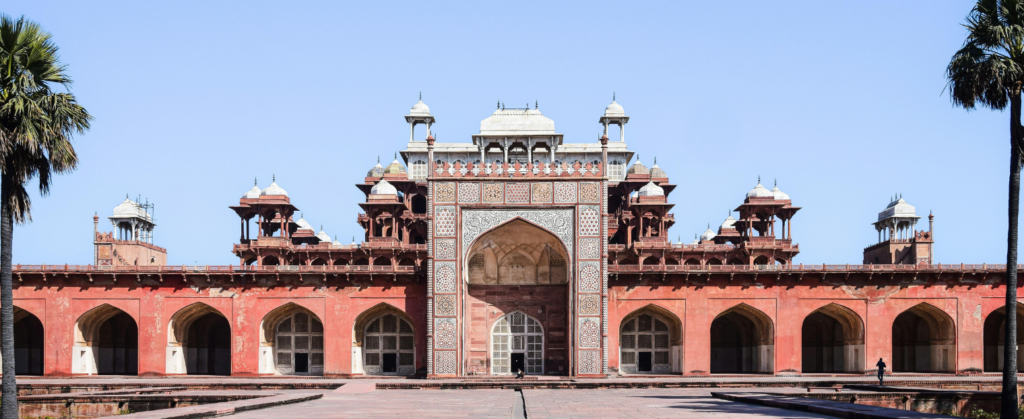
Spread across a vast 119-acre complex, the tomb is surrounded by lush Mughal gardens and designed in red sandstone and white marble, blending Islamic, Hindu, Buddhist, and Christian architectural styles — reflecting Akbar’s philosophy of religious tolerance.
Highlights of Akbar’s Tomb
Mughal Grandeur – A four-tiered pyramid-shaped structure crowned with marble pavilions.
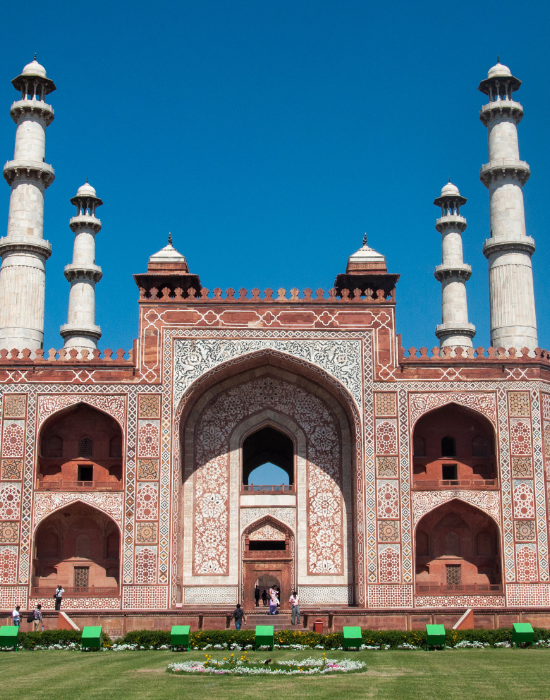
Great Gateways – The southern gateway, built in red sandstone and inlaid with white marble, resembles the Buland Darwaza of Fatehpur Sikri.
Charbagh Gardens – A classic Mughal-style garden divided into four symmetrical sections with water channels.
Blend of Cultures – Intricate carvings and motifs inspired by Persian, Indian, and Mughal art.
Historic Significance – The tomb reflects Akbar’s inclusive vision and stands as a symbol of Indo-Islamic architecture.
Peacocks & Deer – The surrounding gardens are home to deer and peacocks, adding a serene natural charm.
Why Visit Akbar’s Tomb?
Unlike the Taj Mahal’s pure white marble elegance, Akbar’s Tomb offers a unique fusion of cultures and designs, making it a treasure for history lovers, architecture enthusiasts, and those interested in Mughal heritage. The vast gardens, majestic gateways, and peaceful surroundings make it a must-visit on your Agra tour.
Travel Information
Location: Sikandra, about 10 km from Agra city center.
Timings: Open daily, from sunrise to sunset.
Entry Fee: Nominal fee for both Indian and foreign tourists.
Best Time to Visit: October to March for pleasant weather.
Nearby Attractions: Mariam’s Tomb, Itmad-ud-Daulah, Mehtab Bagh, and Taj Mahal.